
Safety is something we all share. Stonebridge is home to residents, motorists, bicyclists, walkers, pets, and wildlife. A little awareness, patience, and consideration can help keep our neighborhoods safe and enjoyable for everyone.
No Soliciting in Stonebridge
 Stonebridge is posted as a No Soliciting community. Our roads are private, and commercial solicitors are not authorized to conduct door-to-door sales within our neighborhoods.
If a commercial solicitor visits your home
- You are not required to open the door or speak with the solicitor.
- If possible, note the name of the company or organization represented.
- Consider contacting the company directly and advising it that Stonebridge is a posted No Soliciting community with private roads.
- If the solicitor is particularly persistent, refuses to leave, or causes concern, report the incident through the Stonebridge Contact Us page so it can be brought to the attention of the Safety Committee or SCA Board.
- If you believe there is an immediate threat to personal safety, call 911.
Please note: Neighborhood fundraising by Scouts, students, and other community groups is different from commercial door-to-door solicitation. Political candidates, petition circulators, pollsters, and similar visitors may also be governed by different rules.
Vehicle Safety and Speed Limits
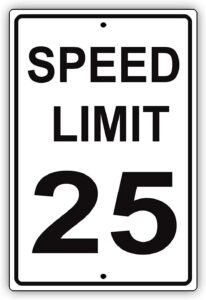
Please observe the posted limit and slow down further whenever weather, visibility, or traffic conditions require it.
Our neighborhood roads are shared by motorists, golf carts, bicyclists, walkers, children, and pets. Drivers should remain alert, avoid distractions, and allow plenty of room when passing others. Please be especially careful near curves, intersections, driveways, traffic islands, and parked vehicles, where visibility may be limited.
Extra caution is important during early morning and evening hours, when walkers, bicyclists, pets, and wildlife may be more difficult to see. Never assume that another road user has seen your vehicle.
A few extra moments of patience can help keep everyone in Stonebridge safe.
Bicycle Safety
 Bicycles are legally considered vehicles, and bicyclists and motorists share responsibility for using the road safely.
For motorists
- Slow down and wait to pass until there is enough room to do so safely.
- Be especially careful near intersections, driveways, curves, and traffic islands.
- Do not underestimate a bicyclist’s speed when turning or entering the roadway.
For bicyclists
- Ride in the same direction as traffic and remain as far to the right as safely practical.
- Obey stop signs, traffic signals, and other roadway markings.
- Use hand signals when turning or stopping.
- Wear a properly fitted bicycle helmet and use visible clothing.
- Use a white front light and red rear reflector when riding in low-light conditions or after dark.
For additional information, visit the Michigan Office of Highway Safety Planning bicycle safety page.
Coexisting with Geese, Swans, and Other Waterfowl
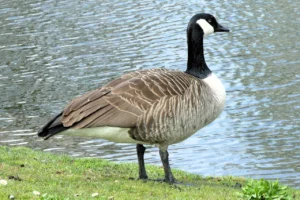 Stonebridge ponds are regularly visited by Canada geese, swans, ducks, and other waterfowl. These birds are an important part of our environment, but large concentrations can create health, property, and safety concerns.
Pet food, spilled birdseed, and other outdoor food sources should also be removed.
Give nesting birds plenty of room
Canada geese and swans can become highly defensive while nesting or caring for their young. Mute swans, a non-native invasive species in Michigan, are particularly territorial.
- Do not approach birds, nests, eggs, or young birds on foot or by boat.
- Keep children and pets at a safe distance.
- Keep dogs leashed near ponds, especially during nesting season.
- Do not touch, relocate, disturb, or attempt to remove a nest or eggs.
- Never attempt to injure or kill waterfowl. Wildlife removal and nest management are regulated and may require state or federal authorization.
Additional guidance from the Michigan DNR:
Coexisting with Coyotes and Foxes
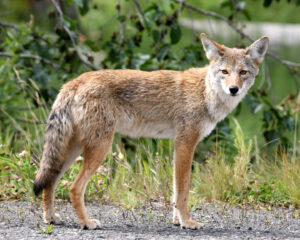 Coyotes and foxes are occasionally seen throughout Stonebridge, including during daylight hours. These animals are naturally present in Michigan and help control populations of mice, rats, and other small animals. A daytime sighting by itself does not necessarily indicate aggressive behavior.
Help prevent conflicts
- Never feed or attempt to tame a coyote or fox.
- Do not leave pet food, garbage, fallen fruit, or other food sources outdoors.
- Clear brush piles and dense ground-level vegetation that can shelter rodents and other prey.
- Supervise small children outdoors.
- Keep cats indoors and accompany small dogs outside, preferably on a leash.
- Never approach, corner, or attempt to touch a wild animal.
If you encounter a coyote
Remain calm, keep your distance, and do not run. Make yourself appear larger and frighten the animal away by yelling, clapping, stomping your feet, or making other loud noises. This practice, sometimes called “hazing,” helps coyotes retain their natural fear of people.
If a coyote displays aggressive behavior—such as approaching repeatedly, growling, snarling, or snapping—move to a safe location and report it to the Michigan DNR’s Report All Poaching hotline at 800-292-7800. Call 911 if there is an immediate threat to a person.
Do not discharge a firearm, bow, or crossbow within or near Stonebridge in an attempt to kill wildlife. Contact the appropriate authorities or a licensed nuisance-wildlife professional when assistance is needed.
For additional information, visit the Michigan DNR coyote guidance page.
Portions of this information originally appeared in the Spring 2024 issue of Stonebridge Tidings. The content has been consolidated and updated for this webpage.